
Need a Plumber in Chino? We’re Available Today.
Upfront pricing. No surprises. Over 1,000 five-star reviews.
Pipe Lining in Chino, California: The Smart Solution to Aging Pipes Without Excavation
If you own a home in Chino, California, you’ve likely heard warnings about aging pipes. And for good reason. Much of Chino’s housing stock—particularly in neighborhoods like College Park, Bridle Trails, and Downtown Chino—was built between the 1960s and 1990s on what was once prime dairy farmland. That means decades of shifting clay soil, hard water mineral buildup, and pipes that are simply reaching the end of their expected lifespan.
The good news? You don’t need to rip up your yard or driveway to fix it. Pipe lining—a trenchless technology—offers homeowners in Chino a faster, cleaner, and more affordable alternative to traditional pipe replacement. In this comprehensive guide, we’ll explain how pipe lining works, why it’s especially important in Chino, and when it’s time to call a professional.
Why Chino Homeowners Face Unique Pipe Challenges
Chino sits in the heart of the Inland Empire, built on geology that creates specific plumbing pressures. The soil here is predominantly clay loam with moderate to high shrink-swell properties—a legacy of the region’s dairy farming past and deep clay deposits. Every season, as moisture levels rise and fall, the ground shifts. That movement, multiplied over 50+ years, puts enormous stress on underground pipes.
Add to that Chino’s exceptionally hard water (240-290 parts per million), and you have a recipe for scale buildup inside pipes. In older homes with galvanized steel or cast iron lines, this combination is devastating. The pipes narrow from internal corrosion and mineral deposits. Slab foundations—common in Chino’s tract developments—crack under soil movement, snapping or pinching supply lines. And mature landscaping throughout established neighborhoods like Shady Oaks? Those tree roots are actively seeking out the smallest cracks in sewer and drain pipes.
For homeowners in these situations, traditional excavation means tearing out driveways, removing mature trees, and dealing with weeks of disruption. Pipe lining offers an elegant alternative.
What Is Pipe Lining and How Does It Work?
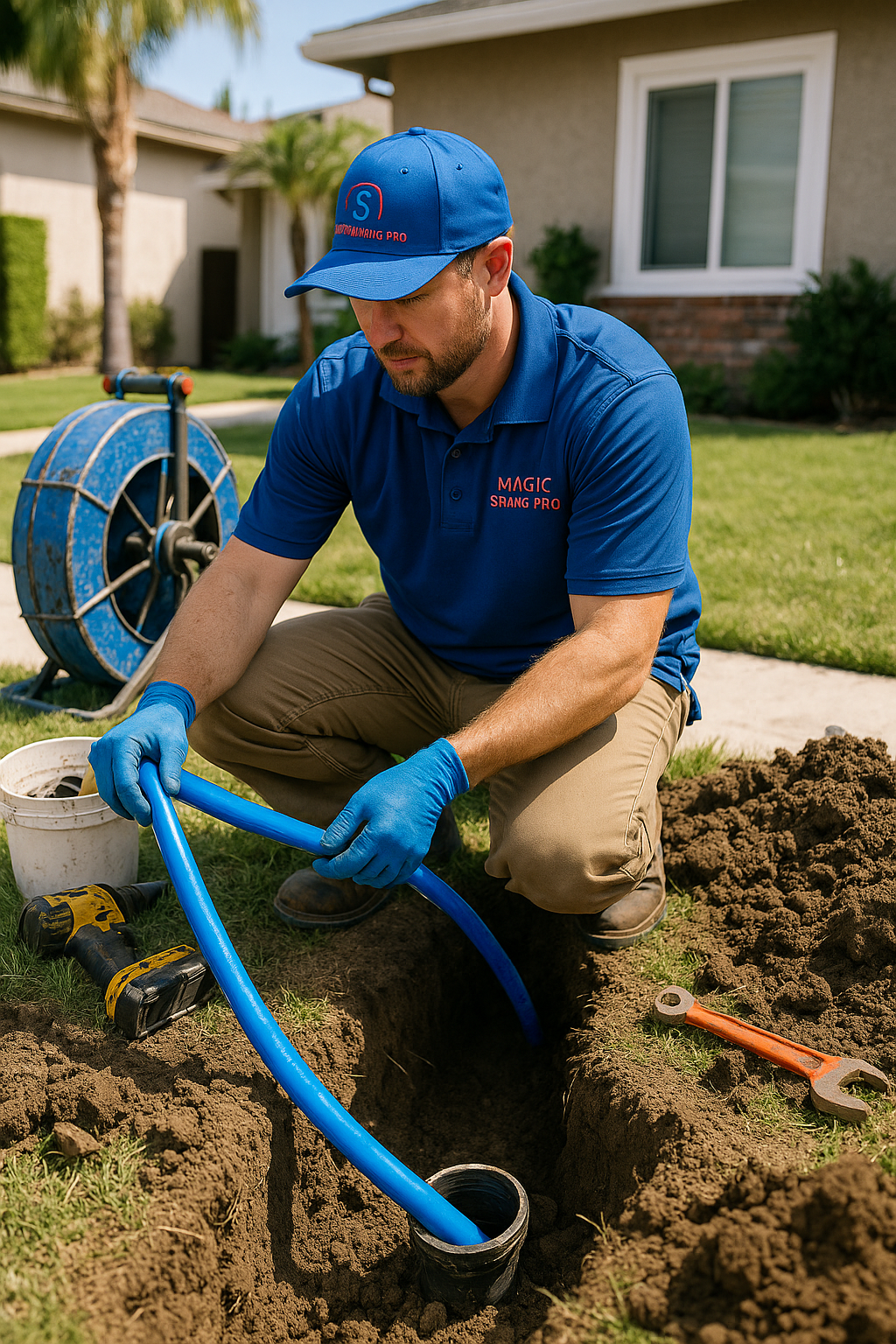
Pipe lining, also called cured-in-place pipe (CIPP) technology, is a trenchless method of repairing damaged pipes from the inside out. Instead of digging up the old pipe, technicians insert a flexible, resin-coated tube into the damaged pipe. Once in place, the resin is cured—either with hot water or UV light—and hardens into a new pipe wall inside the old one.
The process typically unfolds like this:
- Camera inspection: Technicians first run a camera through the pipe to identify damage, cracks, breaks, and root intrusion.
- Cleaning: The pipe is thoroughly cleaned to remove debris, grease, and mineral buildup.
- Preparation: Access points are established, usually through existing cleanouts or small access holes.
- Liner insertion: The resin-saturated liner is carefully fed through the damaged pipe.
- Positioning: The liner is positioned to match the pipe’s internal diameter.
- Curing: Hot water or UV light hardens the resin, creating a seamless new pipe inside the old one.
- Final inspection: A camera confirms the repair is complete and watertight.
The result? A structurally sound, corrosion-resistant pipe that can last 50+ years—all without digging up your property.
Why Pipe Lining Is Ideal for Chino’s Housing Stock
Chino’s neighborhoods present ideal conditions for pipe lining technology:
- Slab foundations: Homes built on concrete slabs (common in 1980s–1990s developments) are expensive to excavate. Pipe lining eliminates that need.
- Mature landscaping: Established trees in College Park and Bridle Trails have roots invading pipes. Lining seals those cracks without tree removal.
- Hard water damage: The mineral-heavy water in Chino corrodes old pipes from the inside. Lining creates a fresh, protected interior surface.
- Clay soil stress: The seasonal shrink-swell of Chino’s clay loam cracks pipes from outside. Lining reinforces damaged sections without requiring soil stabilization.
- Aging pipe materials: Cast iron and galvanized steel lines are brittle and difficult to replace in older homes. Lining bypasses the need to remove them entirely.
Signs Your Chino Home Needs Pipe Lining
Not every plumbing issue requires pipe lining, but certain warning signs should prompt you to call a professional for inspection:
- Slow drains throughout the house, not just one fixture
- Recurring backups in lower-level bathrooms or basement drains
- Sewage smell in the yard or coming from floor drains
- Patches of unusually green, lush grass over the sewer line (indicating a leak feeding the soil)
- Water pooling in the yard during dry weather
- Cracks in the foundation or driveway over known pipe routes
- Multiple plumbing repairs needed in a short timeframe
- Home built before 1980 with original cast iron or galvanized pipes
If your home is in one of Chino’s older neighborhoods—Downtown Chino, Preserve, or Shady Oaks—and you haven’t had a sewer line camera inspection in the past five years, it’s worth having one done. The cost of inspection is far less than emergency repairs or full pipe replacement.
Pipe Lining vs. Traditional Pipe Replacement: A Cost and Impact Comparison
Many Chino homeowners assume pipe lining is a cosmetic fix. It isn’t. Here’s how it compares to traditional excavation and replacement:
| Factor | Pipe Lining (CIPP) | Excavation & Replacement |
|---|---|---|
| Cost | $100–$250 per linear foot | $200–$600+ per linear foot |
| Disruption | Minimal; few access holes | Major; trenches, landscaping damage |
| Timeline | 1–3 days for typical job | 1–2 weeks or longer |
| Landscaping impact | None | Trees may need removal; replanting needed |
| Driveway/patio damage | None | Complete removal and replacement |
| Lifespan | 50+ years | 50–100 years (material dependent) |
| Access to home during work | Full access | Limited; water/sewer shut off |
For homeowners in Chino’s established neighborhoods, where driveways, patios, and mature trees are valuable, pipe lining often delivers 60–70% cost savings compared to excavation.
DIY Diagnostic Steps: What Homeowners Can Do Before Calling a Professional
While pipe lining itself requires professional equipment and expertise, there are safe, practical steps you can take to diagnose a potential pipe problem:
Step 1: Locate Your Sewer Line
- Look for a cleanout access point (usually a cap or plug at ground level) near your home’s foundation, typically 3–5 feet away on the street-facing side.
- In Chino’s older neighborhoods, cleanouts are sometimes buried. Check your property survey or original home paperwork for the sewer line route.
- Mark the location. You’ll need this for the professional inspection.
Step 2: Monitor Drain Performance
- Over the course of a week, note which drains are slow—is it just the downstairs toilet, or all fixtures?
- Document when backups occur. Do they happen after heavy rain? This can indicate root intrusion or clay soil stress.
- Check the yard for wet spots, soft ground, or unusually green patches over the sewer line route.
- Safety warning: Do not dig into these areas. Sewer gas can be hazardous, and you may encounter unexpected utilities.
Step 3: Check Water Usage and Pressure
- Test water pressure at multiple faucets using an inexpensive pressure gauge (hardware stores sell them for $10–$20).
- Normal water pressure is 40–60 PSI. Low pressure, especially in older Chino homes, can indicate mineral buildup in supply lines.
- Note if low pressure is house-wide (suggesting a main line issue) or isolated to one bathroom (suggesting a local problem).
Step 4: Inspect Visible Pipe Sections
- In basements, crawl spaces, or under sinks, look at exposed pipes for corrosion, green or white crusty buildup (mineral deposits), or cracks.
- If pipes are galvanized steel and show orange/red discoloration, corrosion is advanced.
- Safety note: Do not attempt to repair visible cracks yourself. Call a professional.
Step 5: Document and Photograph
- Take photos of any wet spots, cracks, or pipe damage.
- Note the age of your home (available in public records), approximate pipe material, and any plumbing work you’ve had done.
- This information will help the professional assess whether pipe lining is appropriate.
When to Call a Professional: Red Flags You Cannot Ignore
Pipe lining is a job for licensed professionals. Stop your DIY investigation immediately if you encounter:
- Sewage backup in the home: This indicates a blockage or major break. Call a professional right away; this is a health hazard.
- Sewage odor indoors: A sign of venting problems or cracks in the sewer line. Professional assessment is essential.
- Visible cracks or holes in exposed pipes: Do
Ready to Get This Handled?
Same-day and next-day appointments available. Licensed & insured.
Comments are closed