
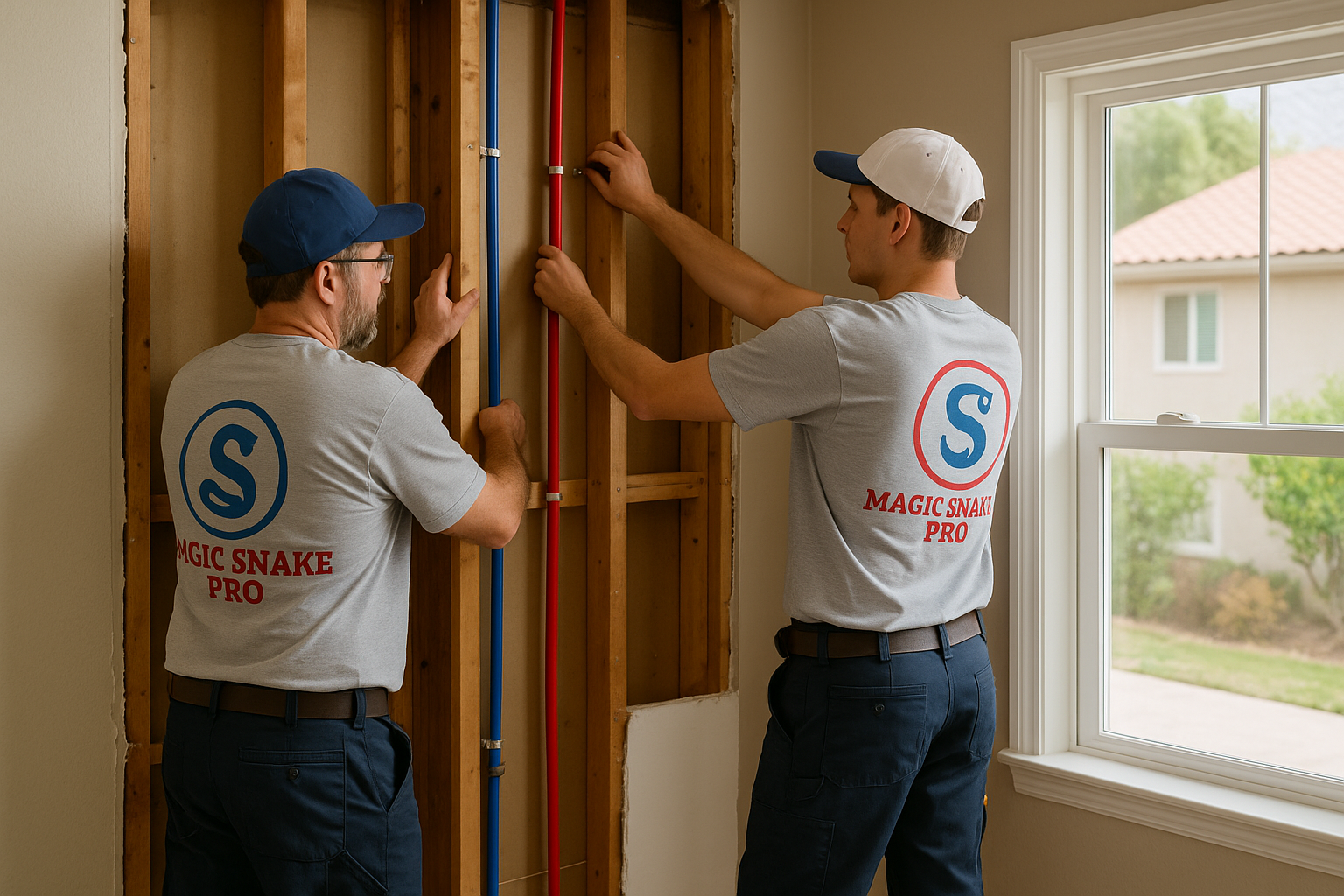
Need a Plumber in Corona? We’re Available Today.
Upfront pricing. No surprises. Over 1,000 five-star reviews.
Emergency Plumbing in Corona, California: 24/7 Expert Solutions for Your Home
When a pipe bursts at 2 a.m. or your water heater fails on a weekend, you need a plumber you can trust right now. Emergency plumbing issues don’t wait for business hours, and neither should your solution. Whether you’re in South Corona, Norco Hills, Sierra del Oro, or Temescal Valley, Magic Snake Pro has been serving Corona homeowners with fast, reliable emergency plumbing services for over 15 years.
Corona’s unique geography—expansive clay soil, aging infrastructure in older neighborhoods, and some of the hardest water in Southern California—creates plumbing challenges that demand local expertise. This guide will walk you through common emergency plumbing situations, what you can do immediately, and how to know when it’s time to call the professionals.
Understanding Corona’s Unique Plumbing Challenges
Corona isn’t just any California city. It’s a sprawling community built mostly between the 1980s and 2000s, with homes ranging from modest single-family residences to luxurious estates in master-planned communities. The city’s terrain, water quality, and aging infrastructure create specific plumbing vulnerabilities that local homeowners should understand.
Expansive Clay Soil and Slab Foundation Issues
Most Corona homes sit on concrete slab foundations—a practical building method that’s now showing its age. The underlying soil is a problematic mix of expansive clay and decomposed granite. This combination expands when wet and shrinks when dry, causing foundation movement that stresses water lines, sewer connections, and underground pipes.
Hillside properties in South Corona and Sierra del Oro are particularly vulnerable. Soil movement here can shift pipes by inches over years, creating cracks, separation points, and eventual leaks. You might notice:
- Water pooling in your yard during rainy season
- Cracks in your foundation or exterior walls
- Sudden drops in water pressure
- Unexplained increases in your water bill
If you’re on a hillside lot, have your main water line inspected every 3-5 years. Early detection can save thousands in repair costs.
Hard Water: Corona’s Hidden Plumbing Enemy
Corona’s water hardness ranges from 200–260 parts per million (ppm)—classified as “very hard.” For perspective, the EPA considers water “hard” above 120 ppm. This mineral-laden water is safe to drink but devastating to plumbing appliances.
Hard water scale buildup:
- Reduces water heater efficiency and lifespan (many fail at 7–8 years instead of 10–12)
- Clogs showerheads, faucet aerators, and washing machine inlet valves
- Reduces flow to fixtures throughout your home
- Increases energy costs as appliances work harder
- Can trigger emergency failures during peak usage seasons
Corona residents without water softeners often face expensive water heater replacements earlier than expected. If you haven’t replaced your water heater in 8 years, don’t wait for it to fail—it’s likely on borrowed time.
Root Intrusion in Older Neighborhoods
Older areas of Corona, particularly neighborhoods near downtown and close to the Cleveland National Forest, have mature trees with aggressive root systems. Sewer lines from homes built in the 1980s and early 1990s are particularly vulnerable. Tree roots seek moisture and can invade even small cracks in clay sewer pipes, causing blockages, backups, and structural damage.
Signs of root intrusion include:
- Slow drains throughout the house
- Gurgling sounds from drains
- Sewage backing up into showers or lowest-level toilets
- Patches of unusually lush grass in your yard (from sewage)
- Rodent or insect problems (attracted to broken sewer lines)
Common Emergency Plumbing Situations in Corona Homes
Burst or Frozen Water Pipes
While Corona’s winters are mild, burst pipes still happen—especially on exposed lines in attics, crawlspaces, or exterior walls. Slab foundation movement can also cause pipes to crack or separate over time, eventually leading to failure.
Signs of a burst pipe:
- Sudden drop in water pressure throughout the house
- Water spraying or pooling inside your home or yard
- Soft spots in ceilings or walls
- Unexpectedly high water bill
- Discolored or muddy water from faucets
Immediate steps:
- Locate your main water shutoff valve (usually near the meter at the front of your property or in the garage)
- Turn it clockwise to close completely
- Turn on a faucet to release remaining water pressure
- Call Magic Snake Pro immediately—(833) 323-7130
- Take photos of visible damage for insurance purposes
Safety warning: Do not attempt to repair burst pipes yourself. Water damage can spread rapidly, and improper repairs can introduce contamination or create structural problems.
Water Heater Failure
This is the most common emergency plumbing call in Corona—and for good reason. Hard water dramatically shortens water heater life. A 40–50-gallon tank that should last 10–12 years often fails after 7–8 years in Corona’s service area.
Emergency warning signs:
- No hot water at all
- Water leaking from the tank base
- Strange noises (rumbling, popping, knocking)
- Rusty or discolored hot water
- Rotten egg smell (hydrogen sulfide gas)
What to do:
- Stop using hot water immediately
- If water is leaking, turn off the water supply to the heater using the isolation valve above the tank
- Turn off the power (gas or electric) to the heater
- Call Magic Snake Pro for same-day or next-day replacement
Corona residents should consider upgrading to a tankless or hybrid water heater system—they’re more efficient in hard water conditions and save money long-term.
Slab Leaks and Foundation-Related Breaks
This emergency is particularly common in South Corona’s hillside homes and older neighborhoods on slab foundations. Soil movement, hard water corrosion, and age cause water lines beneath your foundation to crack or separate.
You may notice:
- Warm spots on your floor (from hot water line leaks)
- Water pooling under or near your house
- Foundation cracks appearing or worsening
- Mold or moisture in crawlspaces (if accessible)
- Unusually high water bills with no visible leak
This is a serious emergency because water under your foundation can cause structural damage, mold growth, and costly repairs. Do not ignore slab leak symptoms.
Immediate action:
- Shut off your water at the main valve
- Contact Magic Snake Pro for emergency slab leak detection and repair
- Document the location of warm spots or water pooling
- Notify your homeowner’s insurance (they may cover damage)
Clogged or Backed-Up Drains and Sewers
In neighborhoods near the Cleveland National Forest and in older South Corona areas, tree root intrusion is a major culprit. In newer subdivisions like Sierra del Oro and Chase Ranch, blockages are often from grease buildup, hair, or flushed inappropriate items.
Emergency symptoms:
- Sewage backing up into shower, toilet, or lowest drains
- Gurgling sounds from multiple drains
- Slow drains throughout the house (not just one fixture)
- Foul odor from drains
- Water pooling in your yard
What you can try (if it’s safe):
- Do not use any plumbing fixtures if sewage is backing up
- Avoid chemical drain cleaners—they don’t work on severe clogs and can damage old pipes
- If only one drain is slow, try a plunger: fill the sink with a few inches of water, place the plunger over the drain, and pump vigorously 15–20 times
- If multiple drains are slow or backed up, call Magic Snake Pro immediately
When to call the professionals: If your main sewer line is blocked (affecting multiple fixtures) or if you suspect root intrusion, do not delay. Magic Snake Pro uses video camera inspection to identify the problem and can deploy hydro-jetting or targeted root removal without excavating your entire yard.
Leaking Faucets, Fixtures, and Supply Lines
While a dripping faucet might seem minor, in Corona’s hard water environment, it often signals mineral buildup in the valve seat or cartridge. Additionally, older homes may have failing supply line connections that worsen with age.
Types of leaks requiring emergency attention:
- Spraying or gushing water from under a sink
- Water pooling in cabinets (mold risk)
- Leaks in walls or ceilings (structural damage risk)
- Continuous water dripping into a finished room below
Quick fixes for minor leaks:
- Locate and turn off the shutoff valve under the sink (turn clockwise)
- Place a bucket under the leak to catch water
- Dry the area thoroughly and monitor for mold
- Schedule a professional repair within 24–48 hours
Safety warning: If water is actively spraying or you cannot locate the shutoff valve, turn off your main water supply and call Magic Snake Pro immediately.
DIY Emergency Plumbing Steps You Can Take Right Now
Locating and Using Your Main Water Shutoff Valve
Every Corona homeowner should know exactly where their main water shutoff is located. In an emergency, every second counts.
Steps to find it:
- Look near your water meter (usually in the front yard or on the street side of your property in a small box)
- If you have a basement or crawlspace, check along the main water line entering the house
- Check inside the garage near the foundation
- Some homes have the shutoff inside, near the kitchen or laundry room
-
Ready to Get This Handled?
Same-day and next-day appointments available. Licensed & insured.
Comments are closed